Colombian Emerald vs Lab Grown: What the Difference Costs

Quick Answer
"Colombian" describes where a natural emerald came from. "Lab grown" describes how a stone was made. They are not competitors — a lab grown emerald has no origin, and a Colombian emerald is necessarily natural.
So the honest comparison is: what does a lab grown emerald cost in our catalogue, and what do you need to check before accepting a Colombian origin claim from someone else? Lab grown emerald styles in our stock: 25, median $23.50.
What "Colombian" actually certifies
Colombia is the most cited emerald origin, and origin does affect natural stone price. But origin is an appellation — it says where the rough was mined, not how good the stone is. A poor Colombian emerald is still poor. A fine Zambian one is still fine.
Which means: a seller quoting "Colombian" without a laboratory report is asking you to trust a word. Origin claims on natural emerald normally travel with a grading report from a recognised laboratory. Without one, the word carries no verifiable weight.
Our own emerald stock, in numbers
| Measure | Lab grown emerald (ours) |
|---|---|
| Styles | 25 |
| Variants | 214 |
| Median style | $23.50 |
| Lowest | $16.84 |
| Highest | $913.39 |
Note the highest figure: $913.39. Some of our emerald work is a multi-stone silver necklace where the metalsmithing dominates. Price follows the piece, not the origin story.
The comparison buyers actually need
If you are weighing a Colombian natural emerald against a lab grown one, the useful frame is this:
- Lab grown: known price from a catalogue, no origin claim, same optical properties, same hardness.
- Natural Colombian: price depends on colour, clarity, treatment status and certificate. Two stones of the same carat can differ by a factor of ten.
Comparing one catalogue number to one origin word is not a comparison. Compare certificates, carat, cut, treatment and metal.
What we will and will not claim
We sell lab grown emerald and we say so. We do not sell natural emerald, so we do not quote natural prices — any figure we gave would be a guess dressed as data. If a competitor quotes you a Colombian emerald at a specific price, ask for the laboratory report number before you treat it as real.
What "Colombian" means when nothing was mined
Lab-grown emerald is manufactured, so the word Colombian cannot describe origin. In the trade it describes a colour target: the grower aims for the specific green that Colombian emeralds are known for. A Colombian-type lab emerald is a manufactured stone tuned to that hue.
This is worth stating plainly because marketing sometimes lets the word imply provenance. It does not. What you are buying is a colour, and the colour is real even though the geography is not.
Zambian versus Colombian, side by side
The practical difference is temperature. Colombian-type green reads slightly warmer and more saturated; Zambian-type reads cooler, with a touch more blue and sometimes a deeper tone. Neither is superior, and preference between them is genuinely personal — which is why we stock both rather than picking one.
If you are choosing blind, consider skin tone and the metals you wear. A cooler green sits well with white metal; a warmer green often reads better against yellow gold.
The price question buyers actually ask
"Is lab-grown emerald cheaper than natural?" Yes, substantially — but that comparison hides more than it reveals. The relevant comparison is against another lab-grown stone, or against the setting you are putting it in. Our emerald styles median $23.50 in total, which tells you that in most of our pieces the setting, not the stone, is the larger cost.
If a natural emerald quote is ten times a lab-grown one, the gap is real but it is a gap in the stone alone. On a finished piece with a handmade setting, the total gap is narrower than the stone gap suggests.
Durability, and why setting choice matters
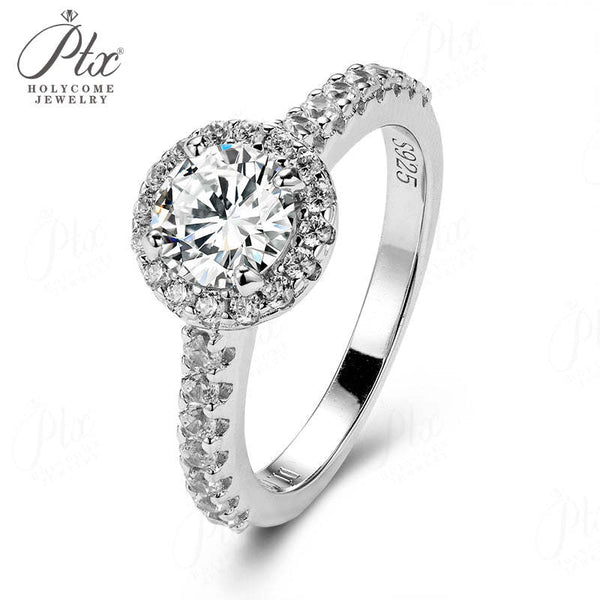
Emerald is brittle compared with sapphire or diamond. It does not tolerate knocks well, and a prong-set emerald in a ring worn daily is a genuine risk. A bezel setting surrounds the stone and absorbs impact; a halo adds protection at the edges.
This is the single most useful piece of advice in this article: if you want an emerald ring for constant wear, choose a protective setting rather than an open four-prong. The stone is the same; the survival rate is not.
How to judge the stone you receive
Look at it in daylight, not under a shop spotlight. Emerald's colour shifts more than most stones between light sources, and a stone that looks rich under warm light can read flat in daylight. Check the stone against skin, because green next to skin changes appearance more than green on a white card.
Then check the setting: the stone should sit level, the prongs should grip without pressing into the table, and there should be no gap between the stone's girdle and the metal seat.

FAQ
Is a lab grown emerald the same as a Colombian emerald?
No, and the question mixes two axes. Lab grown describes synthesis; Colombian describes mining origin. A lab grown stone is not from Colombia and never was.
Is Colombian emerald better quality?
Origin alone does not determine quality. Colour, clarity and treatment matter more. A Colombian label without a grading report is a marketing claim.
What does a lab grown emerald cost in your catalogue?
Median $23.50 across 25 styles, from $16.84.
Do lab grown emeralds lose value?
They are not an investment asset in the way a certified natural stone can be. Treat a lab grown emerald as jewellery you wear, priced accordingly, rather than as stored value.
Will the colour fade?
Lab grown emerald has the same stability as natural emerald and is not treated with the fracture-filling common in natural stones. It is a durable choice for daily wear, though emerald is softer than sapphire or diamond.