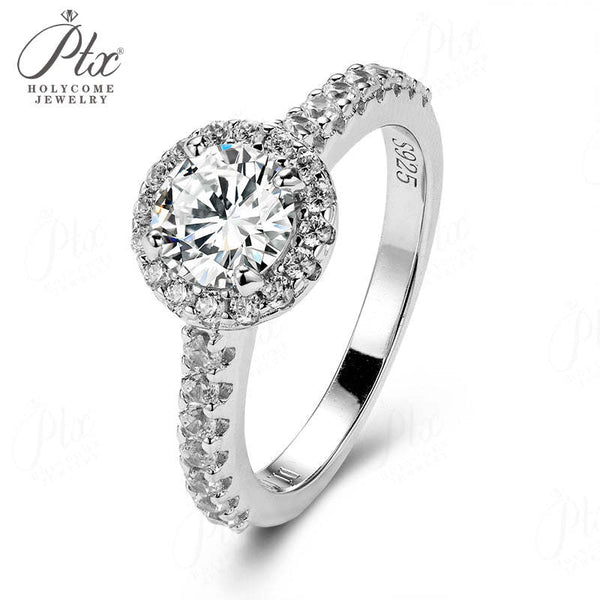
8ct and 10ct Moissanite: $188 and $231 Median

Quick Answer
8ct: 198 variants, median $187.69. 10ct: 202 variants, median $230.77.
Both are large-stone categories at prices well below what the size suggests. Both are also past the point where jewellery is designed for everyday wear.
The comparison
| Carat | Variants | Median | Range |
|---|---|---|---|
| 8ct | 198 | $187.69 | $42.96 – $818.53 |
| 10ct | 202 | $230.77 | $49.85 – $903.98 |
Going from 8ct to 10ct adds $43.08 at the median — two extra carats for about $43.08. In diamond terms that jump would be enormous. In moissanite it is marginal, which is the entire argument for the stone.
What these sizes are for
Eight and ten carats are not subtle. They are worn as statement pieces — a single large pendant, a cocktail ring, something designed to be the focal point of an outfit.
That is also why the median stays modest: these pieces are typically set in silver because the buyer is optimising for visible size. A ten-carat stone in heavy gold would price far above $230.77.
The practical problems
- Height off the hand. A 10ct ring sits very high and catches on everything. Cocktail wear, not daily wear.
- Setting load. At this size the setting has to carry real weight. A cheap setting on a big stone is a breakage waiting to happen.
- Perception. Size this large reads as costume to some viewers regardless of what the stone is. If that bothers you, stay at 2–3ct.
Wait — 5.5ct reads oddly high
One anomaly worth flagging for anyone reading our carat table: the 5.5ct group medians at $1,369.55 across just 55 variants. That is a small sample skewed by specific high-value pieces, not a genuine price step at 5.5 carats. Treat small-`n` buckets with suspicion, including this one.
The two large rows
198 variants at 8ct, median $187.69, from $42.96 to $818.53. 202 variants at 10ct, median $230.77, from $49.85 to $903.98. Both medians are modest relative to the carat weight, which confirms that almost all of these are total-weight pieces.
A single 8ct or 10ct stone is a rarity in any catalogue — genuinely large stones are cut to order. What sells at these weights is the multi-stone format: tennis bracelets, line necklaces, cluster pendants. The carat figure describes the whole piece.
What 10ct total actually looks like
Ten carats spread across a tennis bracelet is roughly 55 to 60 small stones. Across a line necklace, more. Across a halo pendant, a centre stone plus a ring of smaller ones. In every case the piece reads as fine jewellery without one dominant stone — and it wears comfortably because the weight is distributed.
This is the format most buyers should consider when they want presence. A 10ct total piece is wearable daily; a single 10ct stone is not.
Cost structure at large total weights
Setting labour dominates. Every stone is individually seated, so a 60-stone bracelet carries 60 times the setting work of a solitaire. That is why these pieces are expensive relative to their carat weight — you are paying for hands, not for silicon carbide.
It also explains the maintenance profile: more stones means more prongs to check, and a higher chance that one works loose over years of wear. Annual inspection is worth more on a 60-stone piece than on a solitaire.
Advice for large-weight buyers
- Confirm total versus centre weight. At these numbers the ambiguity is almost always present.
- Count stones, or ask for the count. It predicts both price and maintenance.
- Check the clasp or finding if it is a bracelet or necklace — that is the failure point, not the stones.
- Ask about matching. Sixty stones that do not match in colour read as a flaw from a distance.
What a large total-weight piece is for
These weights exist because a distributed piece is wearable where a single large stone is not. A 10ct line necklace sits flat, weighs little per point of contact, and survives daily wear. A single 10ct stone would be a display piece.
So the carat figure at this level describes the piece, not a centre stone. That is the whole explanation for why the medians here look modest.
Stone matching at scale
Sixty stones in a line must match in colour and size. That matching is skilled work, and it is the difference between a piece that looks like fine jewellery and one that looks assembled. At the entry price, matching is where corners get cut.
Ask how the stones were matched, and look along the line in daylight. Mismatch shows as a colour band or a size step, and it is obvious once you look for it.
Maintenance expectations
More stones means more prongs. A 60-stone piece has roughly 240 prong tips to check, and one loose stone per year is normal wear. Budget for an annual inspection rather than treating it as a defect.
Cleaning matters more too: soap and lotion collect between stones and dull the whole line. A soft brush and mild soap, monthly, keeps it bright.

FAQ
How much is an 8ct moissanite?
Median $187.69 across 198 variants, from $42.96.
How much is a 10ct moissanite?
Median $230.77 across 202 variants, from $49.85.
Is 10ct too large to wear?
For daily wear, yes. It is a statement piece. Expect it to sit high and attract attention.
Why is the price jump from 8ct to 10ct so small?
Because moissanite rough is inexpensive relative to the finished setting. Two extra carats add about $43.08 at the median.
Are these sizes real carat weights or diamond equivalents?
These are the carat figures as listed in our variant names. Moissanite is less dense than diamond, so a stone of the same carat weight measures slightly larger — see our carat-to-size guide for the conversion.