Cushion vs Oval vs Emerald Cut: Which Makes Your Finger Look Longer
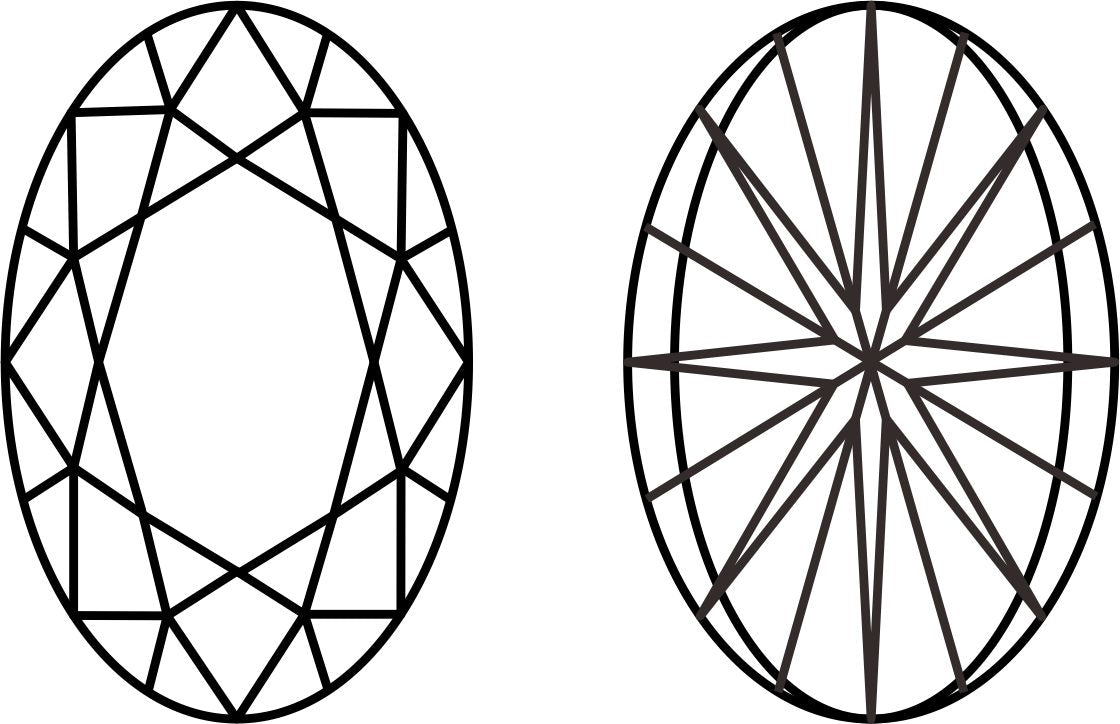
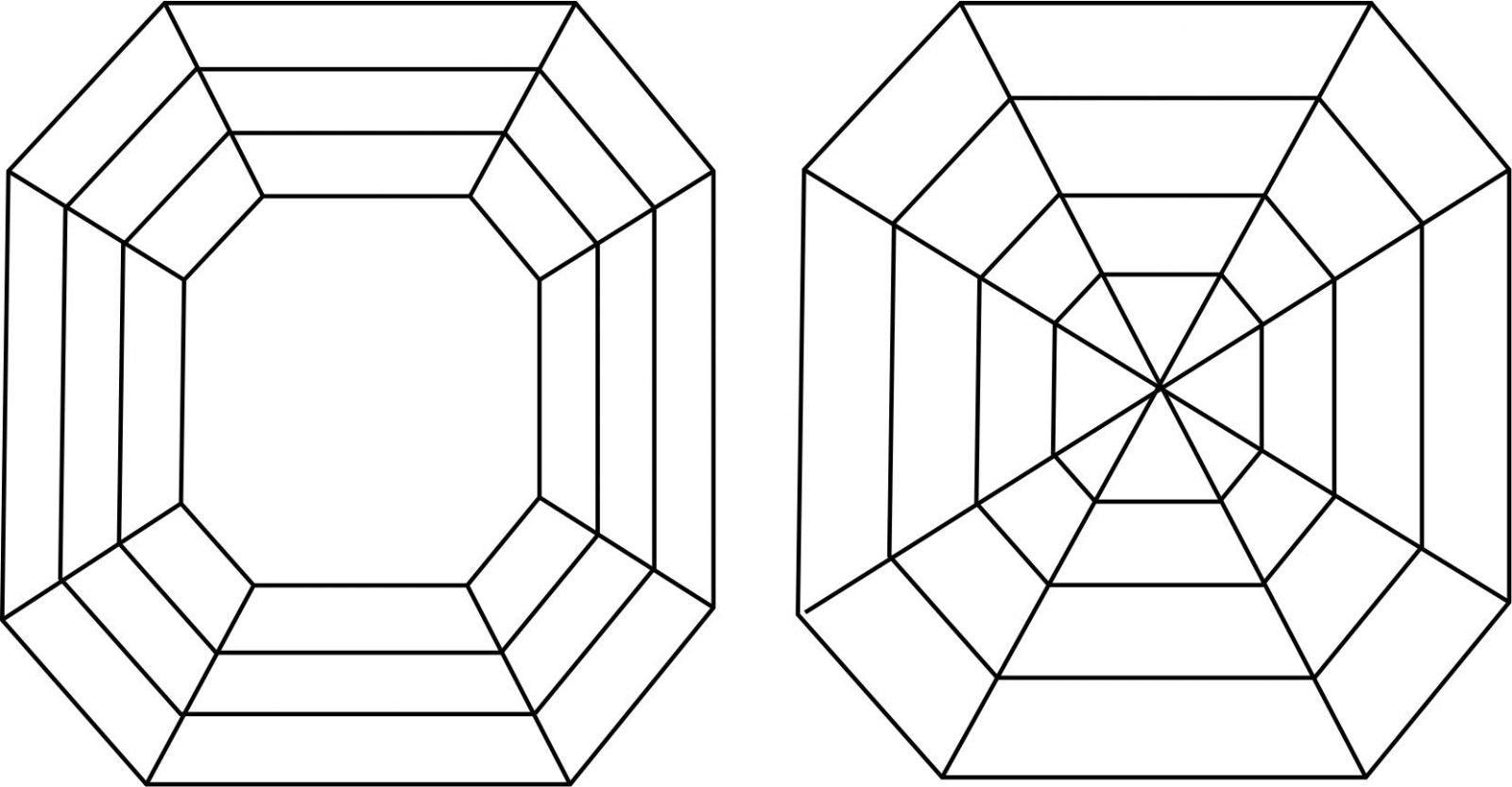
Step cuts show clarity instead of fire, and read smaller than brilliant cuts. This is the question every customer asks while looking at their own hand, and the honest answer is that it depends less on the cut than on the ratio of the stone's length to its width — and on how that ratio relates to your finger. Two stones of the same carat weight can look completely different on the same hand.
Here is how each shape actually behaves, without the marketing.
The rule that actually matters: length-to-width ratio
A round stone has a ratio of 1.00 — as long as it is wide. Everything else is elongated to some degree:
- Round — 1.00. Maximum brilliance, no finger-lengthening effect.
- Cushion — 1.00 to 1.10. Square-ish with rounded corners. Reads as soft and vintage; adds almost no length.
- Princess — 1.00 to 1.05. Square with sharp corners. Looks modern and geometric, not lengthening.
- Asscher — 1.00 to 1.05. Square step cut with cut corners. Architectural, and reads smaller than its carat weight.
- Oval — 1.30 to 1.45. The most efficient lengthening shape. Covers more finger per carat than anything else.
- Emerald — 1.40 to 1.55. Long rectangle with step facets. Strong lengthening, but reads smaller than a brilliant cut of the same weight because step cuts return less light.
- Pear — 1.45 to 1.70. Longest visual footprint. Points in one direction, which is why it should point toward the fingertip.
- Marquise — 1.75 to 2.10. The most extreme elongation. Covers the most finger length per carat and looks dramatic, but is divisive — people either love it or find it dated.
- Radiant — 1.20 to 1.40. Rectangular brilliant cut. Moderate lengthening with more fire than a step cut.
If the goal is "makes my finger look longer," the answer is oval, pear or marquise. Oval is the safe choice — it lengthens without the shape being a statement.
Brilliance: why emerald and asscher read smaller
This is the part that catches people out. A 2ct emerald cut and a 2ct round brilliant occupy similar area, but the round looks bigger.
The reason is facet structure. A brilliant cut has 57+ facets arranged to return light back to the eye from many angles, so the entire stone appears to glow. A step cut (emerald, asscher) has long, flat, parallel facets that act like mirrors — they show the depth of the stone and its clarity, but they return much less light toward the viewer. The result is that a step cut looks glassy and architectural rather than bright, and reads visually smaller.
That is not a flaw, it is the point: step cuts are for people who want to see the stone itself rather than a sparkle. But if your goal is maximum visual size, a step cut will work against you.
Hand shape: the part most guides skip
Short fingers. Elongated shapes help. Oval and pear lengthen the visual line of the finger. Avoid wide, square stones (cushion, princess, asscher) which can make a short finger look shorter.
Long fingers. Almost everything works. This is where square and step cuts actually shine — a long finger gives an asscher or emerald cut the room to be architectural without looking cramped.
Wide fingers. A larger stone covers more area, and elongated shapes distribute that area along the finger rather than across it. A wide band with a small round can look lost; a marquise or oval on the same hand holds its own.
Narrow fingers. Be careful with very large stones — a 3ct round on a size 4 finger looks disproportionate. Oval and pear let you get more visual presence at a lower carat weight, which is why they work well on slim hands.
What each shape costs you
At the same carat weight:
- Round is the most expensive per carat in diamond, because cutting a round brilliant wastes the most rough material. In moissanite the gap is smaller but still present.
- Fancy shapes (oval, pear, marquise, emerald, cushion) preserve more rough, so they cost less per carat for the same weight. This is why an oval often costs less than a round of the same carat — and why it looks bigger.
- Emperor cuts and unusual shapes may cost more because they are produced in smaller volumes.
Practically: oval gives you the most visible size per dollar in almost every case, which is why it outsells every other fancy shape outside round.
Moissanite-specific: the double refraction issue
One thing that matters for moissanite and not for diamond: moissanite is doubly refractive, meaning light splits into two paths as it passes through the stone. In stones above roughly 1.5 to 2 carats, this can produce a slight haziness or a doubling of the facet edges in step cuts especially.
Step cuts (emerald, asscher) have large flat facets that make this more visible. Brilliant cuts (round, oval, radiant) break up the light more and hide it better. If you are buying a 2ct or larger moissanite in an emerald cut, ask to see the specific stone, or stick to brilliant cuts where the effect is masked.
Below 1.5ct, most people cannot see it without knowing to look.
How to actually decide
Want the safest, brightest choice? Round. It hides inclusions, returns the most light, and suits every hand. It costs the most per carat and does nothing for finger length.
Want your finger to look longer? Oval. It is the standard answer for a reason: lengthens without being a statement piece, works on almost every hand, costs less per carat than round.
Want maximum presence for the money? Marquise or pear. The most visual footprint per carat, but both are love-it-or-hate-it.
Want something architectural rather than sparkly? Emerald or asscher. They show depth and clarity instead of fire. Just accept they read smaller, and if you are over 1.5ct in moissanite, check for double refraction before committing.
Want vintage-soft? Cushion. Rounded corners, brilliant facet pattern, sits between round and oval in personality.