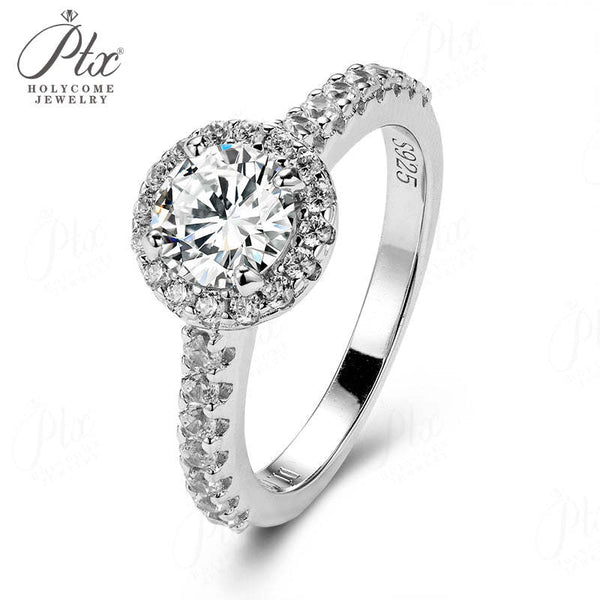
How to Clean Moissanite and Get the Fire Back

Most "dull moissanite" is not dull at all — it is dirty, and the dirt is hiding in the one place people never clean. Moissanite does not fade, cloud, or lose its fire. What it does is collect a film of soap, hand cream and skin oil on the underside of the stone, and that film kills light return faster than most people realise. Here is how to get it back in five minutes.
Why the underside matters more than the top
Light enters a stone from the top and bounces back out through the top. For that to happen, it has to pass through the bottom first — through the pavilion, the pointed part underneath. Every time you wash your hands with the ring on, a thin layer of soap scum deposits on that underside and stays there, because nothing in daily life reaches it.
The stone looks flat, slightly grey, and stops throwing those coloured flashes. People assume the stone has aged. It has not; the surface underneath is coated.
The five-minute method
1. Warm water with a drop of dish soap. Not hot, not boiling. Warm tap water and one drop of plain washing-up liquid in a small bowl. Avoid anything with moisturiser, lanolin or grit in it.
2. Soak for three to five minutes. This softens the film. Do not skip it and go straight to scrubbing — scrubbing on a dry film just moves it around.
3. Brush the underside, not the top. A soft-bristle toothbrush, working at the pavilion from underneath and around each prong. This is the step that actually does the work. Be gentle at the prong tips — firm brushing over years bends them.
4. Rinse in clean warm water. If the ring is silver with rhodium plating, rinse in a bowl rather than under a running tap, and put the plug in. Rings go down drains; it is the most common way jewellery is lost at home.
5. Dry with a soft lint-free cloth and let it air for a few minutes before wearing. Water trapped under a stone can leave a spot.
What not to use
Ultrasonic cleaners are usually fine for metal and hard stones but risky in two cases: if the setting has small pavé or halo stones (vibration can loosen them over repeated use), and if the ring contains any glued elements. If you do not know the setting, skip the ultrasonic.
Steam cleaners are harsher than they look and can force moisture behind a stone.
Toothpaste is abrasive. It will scratch rhodium plating and eventually dull the metal. It is one of the most recommended and least appropriate household tips.
Bleach and chlorine damage the alloy in silver and can pit gold. Take rings off before cleaning the bathroom or getting in a pool.
Jewellery dip cleaners are formulated for silver tarnish and can discolour some plated finishes. Not needed for moissanite, which does not tarnish.
How often
If worn daily: once a week with the soap method. It takes five minutes and it is the difference between a stone that looks alive and one that does not.
If worn occasionally: clean it before wearing, not after. A ring that sits in a box collects dust and skin residue from the last wearing.
A professional clean once a year is worth it beyond the cleaning — it is when a jeweller checks the prongs. Combining the two is what most people actually need.
Silver-specific care
925 sterling silver tarnishes. That is not a fault; it is what silver does when sulphur in the air meets it. Rhodium plating over silver slows this down considerably, but plating wears — typically a year or two on a ring worn daily, longer on a pendant.
When the plating thins, the metal underneath looks warmer and slightly yellow, and people often blame the stone. Re-plating is inexpensive and restores the original look exactly. Most jewellers do it in a few days.
Store silver in a sealed bag with the air pressed out, not loose in a drawer. Air is what tarnishes it.
Storage that prevents most of the problem
Keep pieces separate. Moissanite at 9.25 on the Mohs scale will scratch gold, silver, and softer stones like emerald and pearl if they knock together in a box. A fabric-lined compartment per piece, or a small pouch each, solves it.
Fasten chains before storing so they do not knot, and hang or lay pendants flat rather than letting them tangle.
Keep the box out of direct sunlight and away from radiators. Heat cycling is not good for any setting over years.
The one thing that actually damages moissanite
Moissanite is hard — 9.25 on the Mohs scale, just below diamond at 10 and well above sapphire and ruby at 9. It resists scratching from daily wear very well.
What it does not resist is a direct hard impact on a sharp edge or a point. A marquise point or a pear tip struck against a stone countertop can chip. This is why bezel settings are recommended for fancy shapes worn daily — the metal rim takes the impact instead of the point.
Chipping is rare, but it is the failure mode worth knowing about, because it is the one that cannot be cleaned or polished away.
Everything we make is 925 sterling silver, rhodium finished, or solid 9K, 14K and 18K gold — nickel free and hypoallergenic. If a stone ever looks flat and cleaning does not help, send us a photo: sales@holycome.com. Browse rings, earrings and necklaces. 30-day returns.