How Much Does a 2ct Moissanite Ring Cost in 2026
Metal and setting drive most of the price, not the stone. Most people asking this question have seen a price somewhere between $300 and $3,000 for the same description and want to know which number is real. The honest answer is that a 2ct moissanite ring spans an enormous range, and almost all of the difference comes from three things: the metal, the setting, and where the stone was sourced — not from the stone itself.
Here is what actually drives the number, using our own stock as the reference point.
The stone is the cheapest part
This is the part that surprises people. Moissanite is grown silicon carbide. It is produced in large batches, grows quickly, and has a material cost far below diamond. A 2ct round moissanite stone, on its own, costs a small fraction of what most people assume a "2 carat stone" should cost.
That is not a marketing claim, it is a supply fact. Diamond growth is slow and expensive per carat; silicon carbide is neither. You are not buying less stone with moissanite — you are buying a different material at a different production cost.
What this means practically: when you see two 2ct moissanite rings at very different prices, the gap is almost never the stone. It is the metal and the labour.
Metal is the biggest single variable
A 2ct stone set in 925 sterling silver and a 2ct stone set in solid 18K gold look nearly identical on the hand and differ enormously in price, because the metal itself differs enormously in cost per gram.
Roughly, from lowest to highest:
- 925 sterling silver — 92.5% fine silver alloyed with copper, rhodium plated white. The lowest entry price by a wide margin. Rhodium plating looks identical to white gold when new.
- 9K gold — 37.5% gold content. Cheaper than 14K, softer, and rarely used in the US market but common in the UK and Australia.
- 10K gold — 41.7% gold. Hard and durable, popular for men's rings, slightly duller colour than 14K.
- 14K gold — 58.5% gold. The practical middle. Hard enough to hold a setting for decades, high enough gold content to look and feel like gold.
- 18K gold — 75% gold. Richer colour, softer metal, the highest price of the common alloys.
- Platinum — densest and heaviest, naturally white, does not need plating, and the most expensive per gram.
A 2ct ring in silver versus the same ring in 18K gold can differ by several times the total price, with the stone identical.
Setting style moves the price too
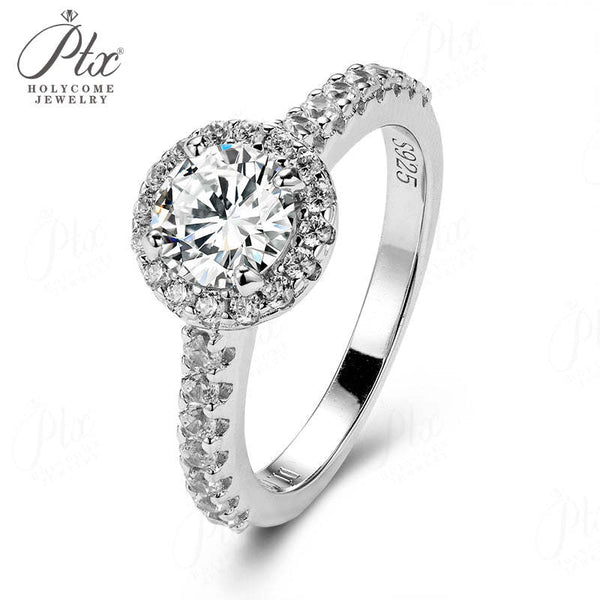
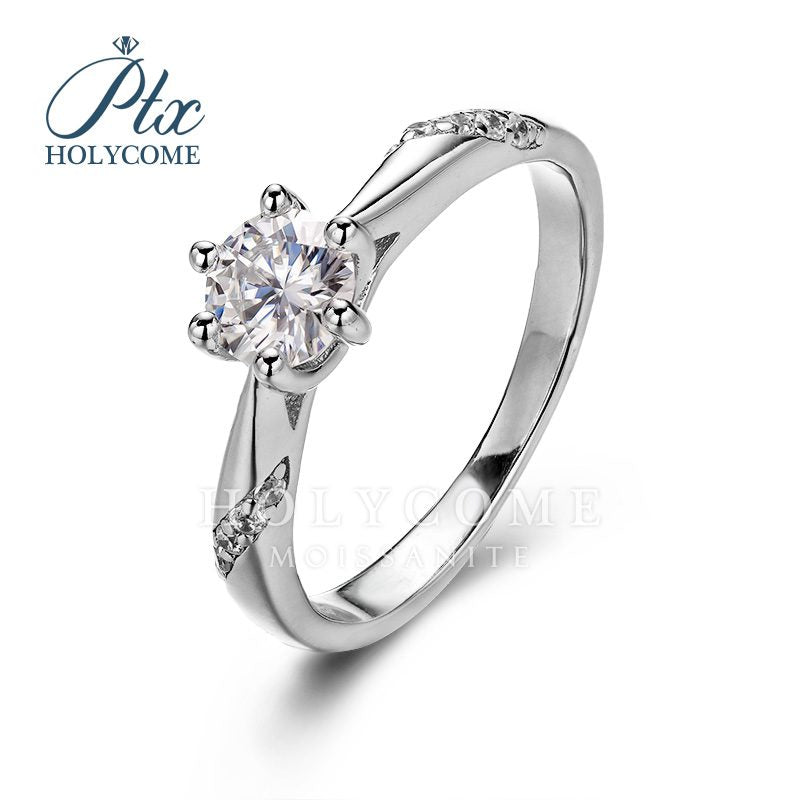
A solitaire holds one stone in one setting — the least metal and the least labour, so the lowest cost for a given stone. A halo adds a ring of smaller stones around the centre, which means more stones, more setting work, and a centre that reads roughly a third larger. Bezel settings require more metal but less prong work. Three-stone settings triple the stone cost. Pave bands add dozens of small stones each needing individual setting.
If you are trying to hit a budget with a 2ct centre, solitaire in silver is the combination that puts the most carat on the finger for the least money. If you want the ring to read as larger than it is, a halo in silver costs less than a bigger solitaire in gold.
Where the stone comes from
This is the one that is hardest to see and matters most.
A ring assembled by a brand that buys finished pieces from a wholesaler carries two margins — the wholesaler's and the brand's. A ring made in the workshop that sells it carries one. The stone and metal are the same; the price is not.
We manufacture in Wuzhou and sell direct, which is why our price for a given specification sits below what a retailer buying finished goods would charge. That is the entire business model, not a discount event.
What you should actually expect to pay
Rather than quote a single number that will be wrong for your specification, here is how to think about it:
- 2ct moissanite, 925 silver, solitaire — the lowest realistic entry point. This is a real ring, not a compromise: silver with rhodium plating looks identical to white gold when new.
- 2ct moissanite, 14K gold, solitaire — roughly the price of the silver version plus the metal difference. This is the configuration most people actually buy, because it will last decades.
- 2ct moissanite, 14K gold, halo or three-stone — the setting work and additional stones push this up substantially.
- 2ct moissanite, 18K gold or platinum, pave band — the top of the moissanite range, still far below an equivalent diamond ring.
For context on where the actual numbers sit: our current stock has a median total price around $132 across all products including small silver pieces, and individual 2ct rings land well above that. Check the specific product page for the exact figure — the variant selector shows the real price for each size and metal combination, and that number is what you pay.
The comparison that matters
A 2ct lab grown diamond ring of comparable visual quality typically costs a multiple of the moissanite equivalent — roughly ten times at the same specification, though the ratio moves with diamond market prices. A 2ct mined diamond costs multiples of that again.
So the real question is not "how much does a 2ct moissanite ring cost" but "how much of my budget should go to the stone versus the metal and setting, given that almost nobody can tell the difference at arm's length."
Our answer, having made both: put the money into the metal if the ring will be worn daily, and into the setting if you want it to read larger. The stone is the part that costs the least and looks the most.
What to check before you buy
Certificate. Moissanite ships with GRA certification matched to the specific item. It is not a diamond certificate and should not be sold as one.
Metal stamp. 925 for sterling silver, 9K/10K/14K/18K for gold, PT950 for platinum. If the listing does not state it, ask.
Size availability. Rings are made to US sizes; check the variant selector rather than assuming your size is in stock.
Return policy. Ours is 30 days on stock pieces in unworn condition. Custom sizes and engraved pieces cannot be returned, so measure first — the ring size guide shows how to do it at home.