Is 925 Sterling Silver Good Enough for an Engagement Ring
Rhodium plated silver looks identical to white gold when new. This question usually comes from someone who has been told two contradictory things: that sterling silver is a cheap metal that will tarnish and bend, and that it is a perfectly good choice for fine jewelry. Both are partly true, and the deciding factor is not the metal itself but how the ring will be worn.
Here is the honest breakdown.
What 925 sterling silver actually is
Sterling silver is 92.5% fine silver alloyed with 7.5% other metals, almost always copper. Pure silver is too soft to hold a setting, so the alloy is what makes it usable. The 92.5 stamp is the standard in the US, UK and most of Europe; you will also see "sterling" or "925" on the inside of the band.
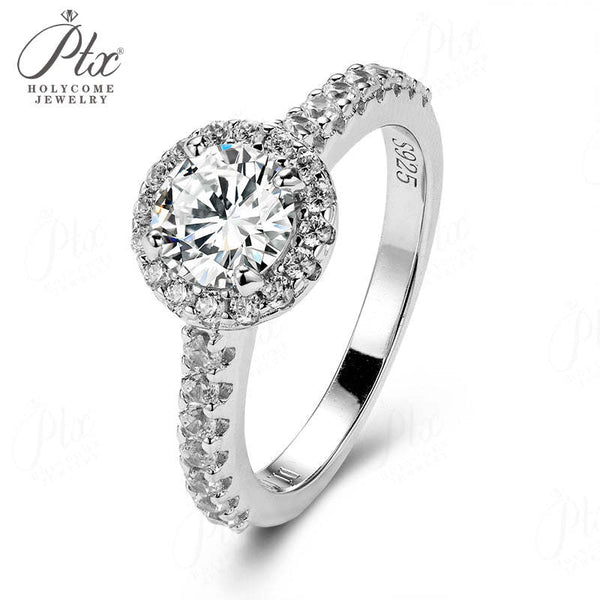
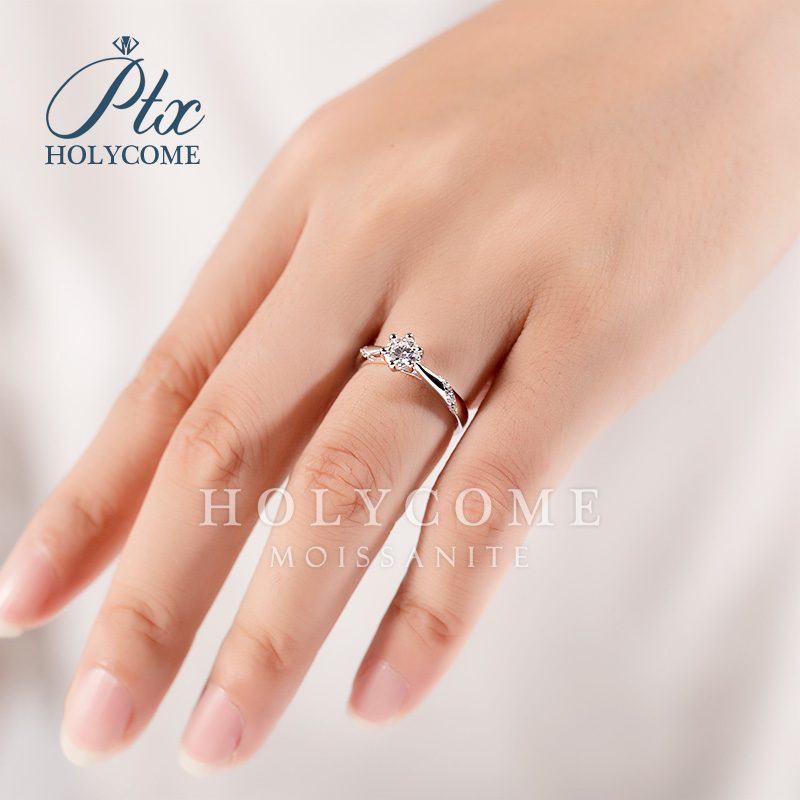
For an engagement ring, the important detail is what happens after: most sterling silver jewelry is rhodium plated. Rhodium is a hard, white, tarnish-resistant metal in the platinum family. A rhodium-plated silver ring looks identical to white gold when new — same colour, same brightness, same surface. At arm's length nobody can tell them apart.
The trade-off that matters: plating wears through
Rhodium plating on silver is a thin layer, typically a few microns. On a ring worn every day, it wears through at the contact points — the bottom of the band where it meets the finger, and anywhere it rubs against other fingers.
What you see first is a slightly duller, warmer patch where the plating has gone. Underneath is silver, which is white but not as bright, and which tarnishes over time when exposed to air and skin oils.
This is not a defect. It is how plated silver behaves. The question is whether you accept re-plating, and how often. On a daily-wear engagement ring, expect to re-plate every one to three years depending on how much it is worn and how acidic your skin is. Re-plating is inexpensive and any jeweller can do it.
Solid 9K, 14K or 18K gold does not have this problem. The metal is white or yellow all the way through; there is no layer to wear off. It can be polished indefinitely and will look the same in twenty years as it does now.
When silver is genuinely enough
The ring will not be worn daily. A piece worn for occasions — travel, events, a second ring — will not wear through its plating in any reasonable timeframe.
The budget is the deciding constraint and the stone matters more. A 2ct moissanite in silver puts more stone on the finger than a 1ct in gold for the same money. If the visual result is what matters most, silver is the rational choice.
It is a temporary or trial piece. Some customers buy silver first to confirm the size, shape and setting they want, then order the same design in gold. Silver is a cheap way to be certain.
Allergies are not an issue. Sterling silver is hypoallergenic and nickel-free. If a partner reacts to cheap fashion jewelry, silver is safe where plated brass is not.
When it is not enough
It will be worn every day for years. This is the main case. A daily-wear engagement ring takes constant abrasion, and the plating will go. If the wearer does not want to think about re-plating, gold is the answer.
The setting is high or delicate. Silver is softer than gold alloys like 14K. A high prong setting in silver is more likely to work loose and need tightening than the same setting in 14K. Bezel settings in silver are more forgiving because there are no prongs to catch.
The piece will be resized more than once. Silver resizes fine, but repeated resizing on a thin silver band can thin the metal. Gold handles it better.
It is being bought as an heirloom. If the intention is to pass it down, silver is the wrong material for the reason above: plating and repeated polishing eventually thin the piece.
What actually wears out first
People assume the stone or the metal fails. In practice, on a well-made ring, the prongs are what fail first — they work loose, catch on fabric, and eventually let the stone drop out. This is true in silver and in gold.
Which is why the practical advice for either metal is the same: have the prongs checked once a year, and never store a ring where it can rub against other jewelry.
How to compare on price
The gap between a 2ct moissanite ring in silver versus 14K gold is entirely the metal — the stone is identical, the labour is nearly identical. If the silver version is affordable today and the gold version is not, the silver ring is a real ring, not a compromise. It will look identical for the first year or two, and then need re-plating.
Our own position: we sell both, and we tell people to buy silver if the ring is occasional, and gold if it is daily. There is no reason to upsell metal that will not be used.
The quick decision
Buy 925 silver if: occasional wear, budget-driven, want the maximum stone for the money, or confirming a design before ordering in gold.
Buy solid gold if: daily wear for years, high or delicate setting, plan to resize, or buying as an heirloom.
Either way: check the prongs annually, store dry, and remember that the certificate (GRA for moissanite, IGI for lab grown diamond) ships with the piece regardless of metal.