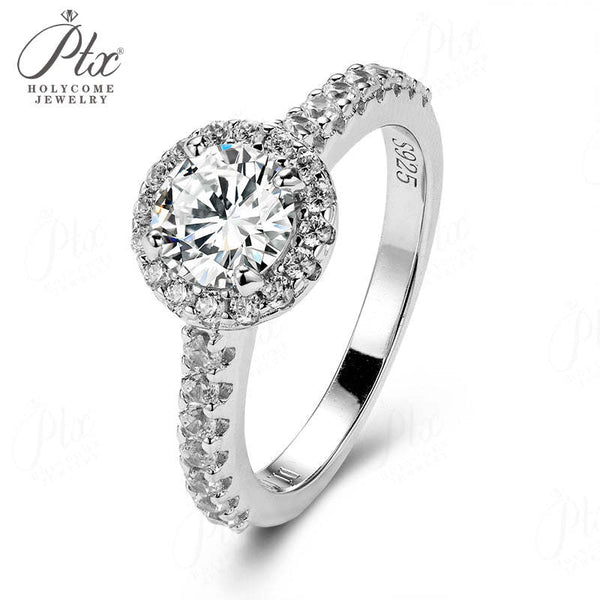
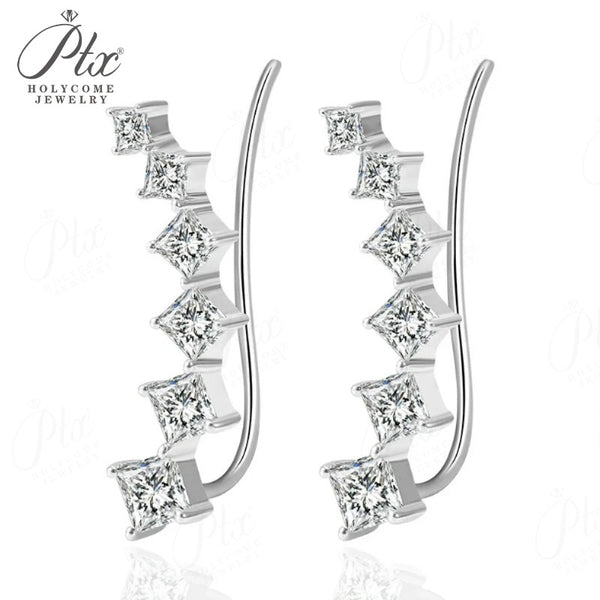
Which Moissanite Shape Costs Most? We Measured 516

Quick answer: Cushion is the dearest shape in our catalogue, at a median of $123.76 across 33 pieces. Emerald is the cheapest at $78.75 across 52. That is a 57% spread, and it is paid for in cutting yield and polishing hours, not in the quality of the stone. Round — the shape most buyers assume carries the premium — sits at $85.88, seventh of nine.
Measured on 17 November 2026 across 516 pieces in our catalogue that record a shape. Every stone is GRA D-colour VVS1 moissanite, hardness 9.25. Medians, not averages, and no competitor prices are used anywhere in this article.
The ranking, dearest to cheapest
Index is the shape's median divided by the round median, so round reads 100.
| Shape | Pieces | Median | Index (round = 100) |
| Cushion | 33 | $123.76 | 144 |
| Pear | 65 | $108.00 | 126 |
| Marquise | 49 | $100.77 | 117 |
| Oval | 57 | $99.18 | 116 |
| Heart | 36 | $93.46 | 109 |
| Princess | 24 | $90.31 | 105 |
| Round brilliant | 180 | $85.88 | 100 |
| Asscher | 20 | $82.61 | 96 |
| Emerald | 52 | $78.75 | 92 |
Cushion sits $28.34 above the site median of $95.42, or 30% above it. Emerald sits $16.67 below. Both are the same material at the same grade; the only variable is what a cutter and a setter had to do to it.
Cushion at the top: all those facets
A cushion is a rounded square with a brilliant-style crown — the facet arrangement of a round brilliant mapped onto a square outline with cut corners. More facets means more polishing time per stone, and the cut corners mean every prong has to be shaped to a curve rather than seated against a straight edge.
It is also the shape where a bad cut is most obvious: the corners gather light differently from the middle, and a shallow cushion goes dull in the centre. Good ones are lovely; they are simply the most work in the room.
Emerald at the bottom: fewer, larger facets
An emerald cut is a step cut. Its crown is a series of long rectangular steps opening out from the table, its pavilion the same in reverse. There are far fewer facets than a brilliant, each is larger, and each is polished flat and parallel.
That is why it is cheap. Fewer facets to cut and polish, a flat table that is quick to finish, and a rectangular block of rough that loses less material than a shape that has to be rounded off. The look is architectural rather than sparkling, and nothing about the price makes it a lesser stone.
"Fancy costs more than round" is only half true
In our data, five fancy shapes cost more than round and three cost less. Cushion, pear, marquise, oval and heart carry premiums from 9% to 44%. Princess, asscher and emerald come in 4% to 8% below round.
The pattern is not round versus fancy. It is facet count plus outline difficulty. Brilliant-style crowns on awkward outlines — cushion, heart, pear — are the expensive combination. Step cuts and square outlines are cheap to polish, however unusual they look on the finger.
What a 57% spread means for a budget
The full range from emerald to cushion is $45.01. To put that next to something people do understand, going from a 1ct centre to a 3ct centre moves our median by $4.54.
| Move | Median change | Multiple of the carat move |
| 1ct → 3ct centre | +$4.54 | 1× |
| Round → oval | +$13.30 | 3× |
| Round → pear | +$22.12 | 5× |
| Round → cushion | +$37.88 | 8× |
| Emerald → cushion | +$45.01 | 10× |
So shape is roughly ten times as expensive a decision as size. Anyone choosing a cut to save money is optimising the right variable; anyone choosing a smaller stone to save money is optimising almost nothing.
Round is cheap because it is efficient
A round brilliant is the shape the industry is built around. Rough is sorted and sold for it, settings are designed for it, and it is the shape every bench has made ten thousand times. Our catalogue holds 180 round pieces out of 516 — 35% of everything with a shape — which is a scale no fancy outline comes close to.
Cheap here means efficient, not inferior. The stone is the same GRA D-colour VVS1 moissanite at 9.25 on the Mohs scale. It has the highest facet symmetry of any cut, hides inclusions best, and is the most forgiving in a setting. The low median is a fact about manufacturing, not about the stone in the box.
Choosing on shape, honestly
If cushion is the one you want, the $37.88 over round is the price of the silhouette and it is worth paying once rather than regretting for years. If you like step cuts and the budget is tight, emerald and asscher are the value end of the catalogue and neither looks cheap on the hand.
What not to do is pick a shape for its price and then compare it to a round for sparkle. They are different objects. Decide the outline first, then the size, then the metal.
FAQ
Why is cushion the most expensive moissanite shape?
Because it combines a brilliant-style crown — many small facets — with a square outline and cut corners. That is the most polishing time per stone and the most fiddly prong work, and it is the shape where a poor cut shows most, so good ones take longer still.
Is a round moissanite lower quality because it is cheaper?
No. Every stone in our range is GRA D-colour VVS1 at 9.25 hardness. Round is cheaper because it is the most efficiently cut shape and the most widely produced, which is a manufacturing fact rather than a grade.
Does shape affect how big the stone looks?
Yes, considerably. Elongated shapes spread carat weight across a longer outline, so an oval or marquise of the same weight covers more of the finger than a round. That is a separate reason people choose them, and it costs nothing extra.
Are the medians a fair comparison between shapes?
Partly. Each median describes the designs we actually sell in that shape, so a shape used mostly on elaborate pieces reads higher for reasons beyond cutting. The counts are shown so you can judge how much weight each row carries.
What we make
We cut, cast and finish in our own factory in Guangxi, which we have operated since 2008, in 925 sterling silver, 9K, 14K and 18K gold, and PT950 platinum. Every stone is GRA-certified D-colour VVS1 moissanite at 9.25 on the Mohs scale, or IGI-certified lab-grown diamond, and every listing names the shape rather than describing it as "fancy".
Shipping is free over $99 and $5.99 below it. Returns run 30 days on unworn pieces in original packaging, excluding custom and engraved work. Shape is the hardest thing to judge from a photograph and the easiest to judge on your own hand, which is exactly what the returns window is for.