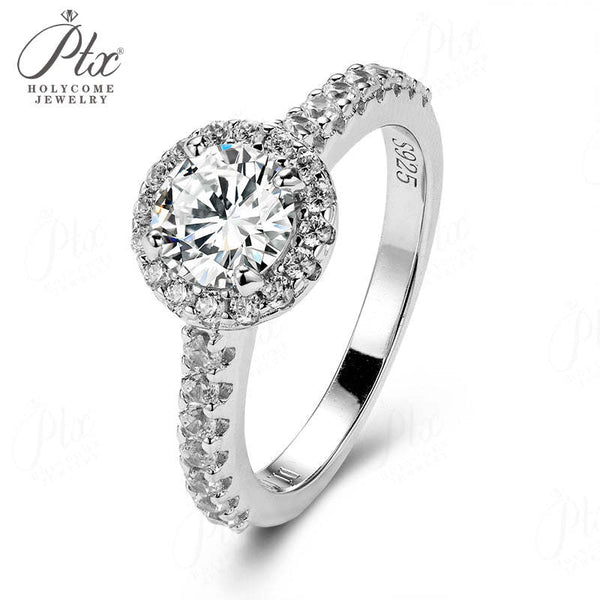
0.5ct Moissanite: 351 Variants From $26 Median

Quick Answer
351 variants at 0.5ct, median $26.15, from $13.05 to $1,910.09.
Half a carat is where moissanite becomes cheap enough that the metal is the whole conversation. At this size you can have a genuine stone in a real setting for less than a meal out.
Half carat against the smaller sizes
| Carat | Variants | Median |
|---|---|---|
| 0.1ct | 59 | $17.32 |
| 0.2ct | 31 | $16.89 |
| 0.3ct | 71 | $21.20 |
| 0.5ct | 351 | $26.15 |
| 1ct | 2,120 | $81.89 |
The jump from 0.5ct ($26.15) to 1ct ($81.89) is the biggest relative step in the whole range — the price roughly triples. That is worth knowing before you assume a full carat is barely more.
What half a carat looks like
A 0.5ct moissanite is a visible stone, not a speck. In a solitaire pendant it reads clearly; as a pair of studs it is the classic everyday size; in a ring it sits at the modest end of what looks intentional.
It is also the size where moissanite's extra fire works in its favour. Small diamonds can look flat; small moissanite still throws colour because the dispersion is higher.
Where 0.5ct is the right choice
- Everyday studs. A half-carat pair is the standard workwear earring — visible, comfortable, replaceable.
- First fine jewellery purchase. Low risk, real materials.
- Gifts where sizing is uncertain. A pendant in this size does not need to fit.
Where it is too small
If you want a ring that reads as an engagement ring, 0.5ct will look modest. And in a halo or multi-stone setting, the half-carat centre can be visually lost once the surrounding stones are counted. For a statement ring, look at 1.5ct and above.
Half a carat in context
351 variants carry a 0.5ct figure, median $26.15, from $13.05 up. That is the largest single bucket outside 1ct and 2ct, which makes sense: half a carat per stone is the standard size for studs, small pendants and accent stones.
Half a carat is not a small purchase in visual terms. On an earlobe it is a clear, visible stone; as a pendant it reads as a proper piece rather than a token. It is small only by engagement-ring standards.
Half a carat versus one carat
| 0.5ct | 1ct | |
|---|---|---|
| Median | $26.15 | $81.89 |
| Variants | 351 | 2,120 |
| Visual size in a stud | Everyday | Noticeable, dressier |
| In a pendant | Delicate | Substantial |
The median roughly triples from half to one carat. Whether that is worth it depends entirely on where the stone sits: on an ear the difference is visible and often worth paying for; on a pendant at collarbone distance it matters less.
Why half carat is the value point
Manufacturing moissanite at half-carat sizes is efficient, so the stone cost is low and the setting cost dominates. That means a half-carat piece and a one-carat piece in the same setting differ mainly by the stone — and the stone is the cheap part. You get most of the visual effect for a fraction of the money.
It is also the size where a pair is affordable. Two 1ct stones cost more than twice two 0.5ct stones in most settings.
Where half carat falls short
It cannot anchor a solitaire. A half-carat centre stone in an engagement ring reads as modest, and buyers who want presence at that size usually choose a halo to add apparent diameter. That works visually but adds stones and labour.
For earrings, pendants, accent stones and stacking bands, half a carat is the sensible default rather than a compromise.
Half carat is the volume size
351 variants — the second-largest bucket in the catalogue after 1ct and 2ct. That volume is not accidental. Half a carat is the standard size for studs, accent stones, small pendants and stacking bands, so it is where manufacturing scale is highest and unit cost lowest.
The median of $26.15 reflects that scale, not a compromise in quality.
Where half carat looks larger than expected
On an earlobe, half a carat reads clearly. In a bezel it gains apparent size because the metal frames it. In a cluster it is one of several and the group reads bigger than the sum.
Where it looks smallest is in an open four-prong solitaire, because there is nothing around it for scale. If you want half a carat to look substantial, choose a setting that frames it.
The pair economics
Two half-carat stones cost far less than two one-carat stones, and in earrings the visual difference is smaller than the price difference. That is why half-carat studs are the default recommendation for a first pair of real-stone earrings.
If you later want larger, the half-carat pair remains useful as an everyday option rather than becoming redundant.
What half carat cannot do
It cannot anchor a halo without the halo dominating. It cannot carry a wide band without looking lost. And in a three-stone design it works only as a side stone, not a centre.
Half a carat is a versatile size with clear limits, and knowing the limits is what makes it a good choice rather than a compromise.

FAQ
How much is a half-carat moissanite?
Median $26.15 across 351 variants, from $13.05.
Is 0.5ct too small for a ring?
It is modest but real. Fine for a delicate ring, small for an engagement-style one.
Why does 1ct cost so much more than 0.5ct?
The relative jump is the steepest in our range: $26.15 to $81.89 at the median. One carat is the size where settings get more substantial.
Are half-carat stones available in gold?
The maximum 0.5ct variant is $1,910.09, which includes better settings. Most of the range is silver, which is where the value sits.
Does a 0.5ct moissanite look like a diamond?
Close enough at a glance, and it has more fire. At this size the difference is subtle rather than obvious.