Half-Eternity vs Full-Eternity: Why One Can Be Resized and One Can't
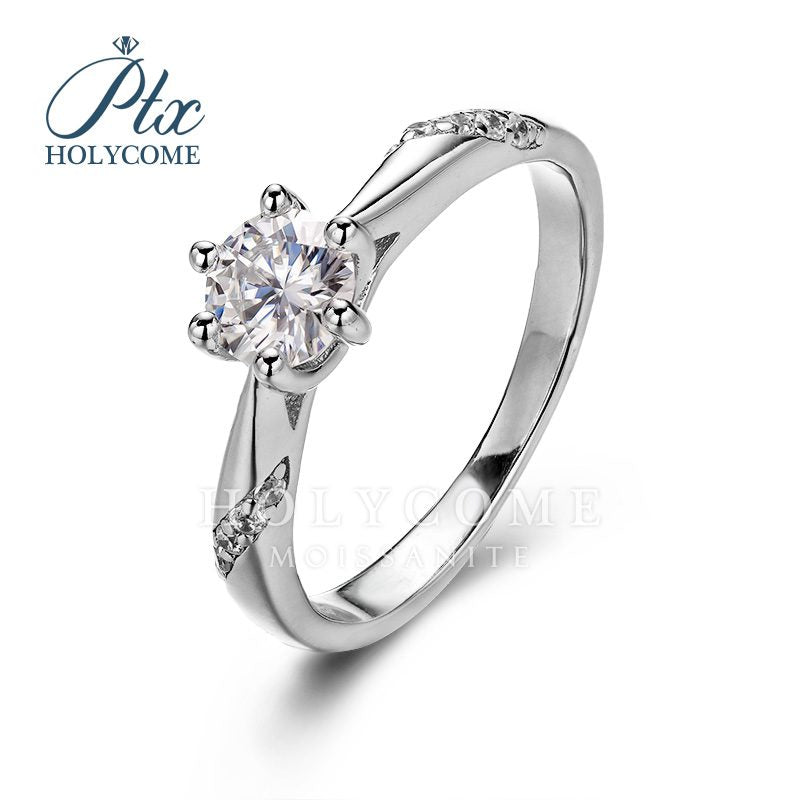
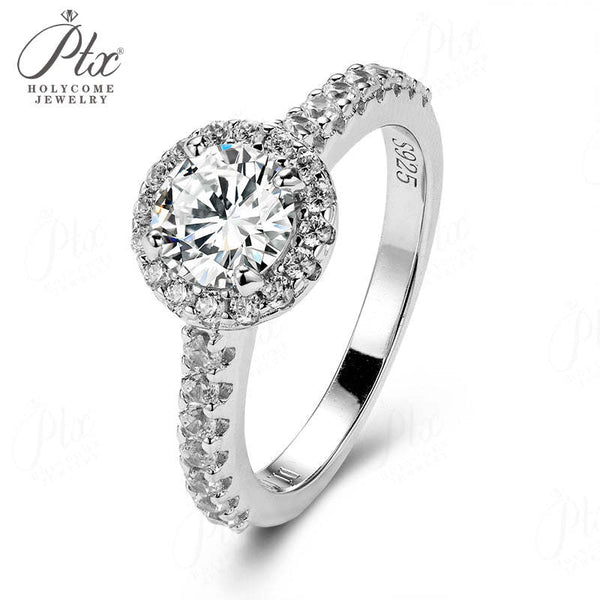
A half-eternity band has stones across the top half only. A full-eternity band has stones the whole way around. The difference looks like a design choice and is actually a structural one: a half-eternity ring can be resized, a full-eternity ring cannot.
That single fact decides which one you should buy, and it is usually not mentioned at the point of sale.
Why full eternity cannot be resized
Resizing a ring means cutting the band at the bottom, adding or removing metal, and soldering it closed. That works when the bottom of the band is plain metal.
A full-eternity band has stones set the entire way around, including the bottom. There is no plain section to cut. To resize it you would have to remove stones, cut, resize, replace stones and re-set them — which means the stones no longer match the original pattern, and the work often costs as much as remaking the ring. In practice, most jewellers will refuse.
Which means: if you buy a full-eternity band in the wrong size, you cannot fix it. You either live with it, or you buy again.
Why half eternity can
A half-eternity band has stones from roughly 10 o'clock to 2 o'clock, with the bottom half plain metal. That plain section is the resizing point. The band can be cut, adjusted 1-3 sizes in either direction, and closed again — standard work, done in a day.
The limit is size range. Most half-eternity bands can move two sizes safely; beyond that the stone spacing starts to distort and the work becomes a partial rebuild.
The other trade-off: wear and comfort
Full eternity looks continuous from every angle. That is the whole point of it. When your hand is open, closed, or seen from the side, there is no plain metal section showing. For a wedding band worn with an engagement ring, that continuity is what people are buying.
Half eternity is more comfortable and more durable at the bottom. The bottom of any ring takes the most abrasion — it rubs against adjacent fingers and whatever the hand touches all day. On a full-eternity band, those stones are taking that wear continuously. Prongs at the bottom work loose faster, and stones at the bottom are the ones most likely to be lost.
This is a real maintenance difference, not a theoretical one. A full-eternity band worn daily usually needs prong checks at the bottom more often than a half-eternity band of the same quality.
Which one for a wedding band
Choose half-eternity if: you are not certain of the size, you plan to wear it daily, you may need to resize after a few years (finger size changes with weight and temperature), or you want the lower maintenance option.
Choose full-eternity if: you are certain of the size — ideally measured by a jeweller, not guessed — and the continuous look from every angle is what you actually want.
Our advice, having made both: if someone is ordering remotely and cannot be measured in person, half-eternity is the safer choice. The visual difference from the top of the hand is minimal, and the resizing option is worth more than the bottom-half continuity most of the time.
What about a full-eternity engagement ring
Same rule applies, and it matters more because engagement rings are worn daily for decades. A full-eternity engagement ring in the wrong size is a serious problem. If you are ordering one remotely, order it half a size up rather than down — a slightly loose ring can be worn with a sizing bead added later, a tight one cannot be worn at all.
Sizing: what to actually measure
Ring size changes through the day and with temperature. Measure at room temperature, in the evening, when fingers are at their largest. If you are between two sizes, go up.
Our ring size guide shows how to measure at home with a strip of paper and a ruler. It is accurate enough for a half-eternity band; for a full-eternity band, have a jeweller measure you if at all possible.
Metal choice interacts with this
Silver bands can be resized, but repeated resizing on a thin silver band thins the metal over time. 14K gold handles repeated resizing better. If you expect to resize more than once — which happens with finger size changes over decades — gold is the more durable base for a half-eternity band.
For a full-eternity band, metal choice does not affect resizability (nothing does), so choose on look and wear: silver for occasional, 14K gold for daily.
The short version
| Half-Eternity | Full-Eternity | |
|---|---|---|
| Resizable | Yes, 1-3 sizes | No |
| Bottom wear | Plain metal, durable | Stones take the abrasion |
| Maintenance | Lower | Prong checks more often |
| Visual from top | Identical | Identical |
| Visual from side/bottom | Plain metal visible | Continuous stones |
| Best for | Daily wear, uncertain size | Certain size, continuous look |