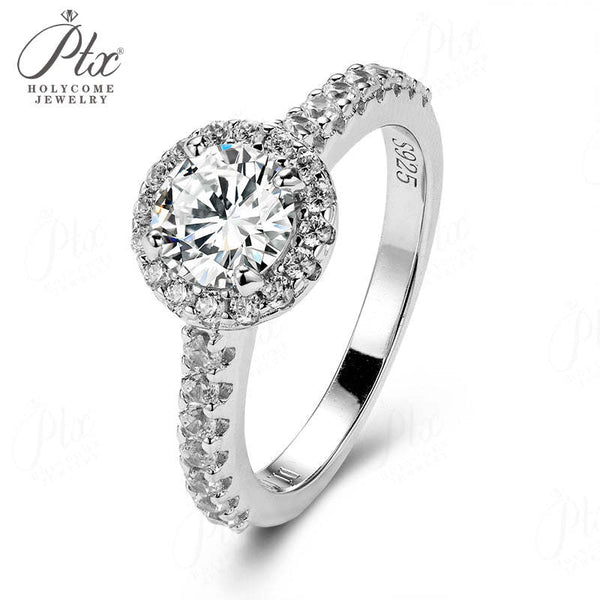
Does Moissanite Hold Its Value? The Honest Answer

Moissanite does not hold resale value. If that sentence ends the conversation for you, this article has done its job in one line. If it does not, here is the honest arithmetic — what retains value, what does not, and why people still buy moissanite anyway.
The short answer
A moissanite stone has almost no resale value. The metal it is set in has some. A finished moissanite ring sold second-hand typically recovers a fraction of its retail price, and often nothing at all through a jeweller, because the trade has no demand for used moissanite.
That is not a flaw in the material. It is simply what happens to any manufactured product with an abundant supply. Moissanite is made, not mined, and supply is effectively unlimited at consistent quality. Things that can be made cheaply do not appreciate.
What retains value, ranked
For context, from most to least reliable:
- Gold as metal — reliably worth its weight, minus refining cost. A 14K piece always has scrap value because gold is gold.
- Platinum — same principle, denser, worth more per gram.
- Large natural diamonds — retain value at the top end, poorly in the middle. A 0.5ct natural diamond recovers very little on resale; a 3ct D-flawless recovers considerably more.
- Lab grown diamond — value has fallen sharply as production scaled. Buy it for the certificate, not the resale.
- Moissanite — effectively zero on the stone. Some value in the metal.
- Silver — small scrap value, dwarfed by the labour in the piece.
The realistic resale experience
If you try to sell a used moissanite ring:
- To a jeweller — most will not buy it, or will offer metal scrap value only. They cannot resell a used moissanite because customers buy new at similar prices.
- On a resale platform — expect to price at 30 to 50% of retail and wait. The buyer pool is small and they are comparing against new.
- To a friend — the best return, because the trust is already there and they know what it cost.
None of this is unique to moissanite. It applies to almost all jewellery below heirloom level. The jewellery trade's margin structure means the moment a piece leaves the shop, most of its price is gone.
Why people buy it anyway
Because the value is in wearing, not owning. Look at it as cost per wear:
- A $500 moissanite ring worn daily for ten years — 3,650 days — works out to about 14 cents a day.
- The same budget in a third of a carat of natural diamond, worn the same way, and then sold for very little, works out considerably more.
If you never intend to sell, resale value is not a real number. It is a number people quote to justify a purchase they have already decided to make.
The exception worth knowing
Metal content is the one part of the purchase that does retain value, and it is worth factoring in:
- 14K gold — roughly 58% gold by weight. Scrap value exists and tracks the gold price.
- 18K gold — 75% gold. More material value, softer metal.
- Platinum — high density means meaningful weight, and platinum scrap is well established.
- 925 silver — minimal. The metal is cheap; the value is in the making.
So if resale matters to you at all, the metal is the only lever. A moissanite ring in 14K gold will recover more than the same ring in silver, even though the stone contributes nothing either way.
What actually preserves value in jewellery
If someone is telling you a piece is an investment, the honest tests are:
- Is it resellable at a known price? Gold and platinum pass. Everything else is speculative.
- Is the supply constrained? Mined stones with certificates, yes. Manufactured stones, no.
- Is there a liquid market? A 1ct natural diamond has buyers. A 1ct moissanite does not.
Almost no finished jewellery passes all three. Buy jewellery to wear. Buy gold if you want a metal store of value, and treat the design as a bonus.
The comparison people actually care about
"Should I buy moissanite or save for a diamond?"
If the reason for diamond is resale value — the numbers do not support it at typical sizes. A 0.5ct to 1ct natural diamond recovers a small fraction of retail on resale. The premium you paid over moissanite is largely gone.
If the reason for diamond is that the word matters — to you, or to the person receiving it, or to family expectations — that is a real and legitimate reason. Provenance and language have value that spreadsheets do not capture. Buy the diamond for that reason, knowingly.
Moissanite is the right choice when the priority is the piece itself: how it looks, how it wears, and what it costs to own. That is most buyers, most of the time.
What we tell customers
We will not tell you moissanite is an investment. It is not. What it is: a stone that is D colour, VVS1 clarity, hard enough for daily wear, chemically stable, and priced so that owning a 2ct ring is realistic rather than a five-figure decision.
Every piece ships with a GRA certificate matched to the stone, so the material and the grade are verifiable. That certificate matters for authenticity and for insurance replacement — not for resale, because there is no resale market to speak of.
Buy it because you want to wear it. That is the whole case, and it is a good one.